Every content creator, whether you are shooting professional travel guides or just trying to capture a weekend away with the family, knows the sinking feeling of missing the moment. For me it’s shooting broadcast talent and there’s sometimes four of them doing bits and getting every great moment feels impossible. Traditional cameras demand that you constantly predict the future. You have to know exactly where the action will be before it actually happens.
The DJI Osmo 360 II arrives on the scene with a very simple and highly appealing proposition: stop framing in a panic and start capturing the entire world around you in one continuous, immersive sphere. It’s a learning curve, but one worth exploring.
Now this is packed with dual square one-inch sensors, crisp 8K video recording, and a fairly sturdy lens design compared to other cameras in the same category. This device is designed to make panoramic filming accessible rather than intimidating. I swapped out my usual gear for a week to take this out for a spin, here is what it is actually like to live with DJI’s newest creative powerhouse.

The Story Behind the Sphere: Why Does It Exist?
Consumer 360 cameras have spent years trapped in a peculiar, slightly frustrating niche. Early adopters loved the sheer novelty of spherical capture, but everyday users frequently complained about grainy resolution, murky low-light performance, incredibly fragile protruding glass lenses, and exhausting desktop editing workflows. A standard action camera was simply easier to deal with.
The Osmo 360 II exists specifically to bridge that persistent divide. Taking the lessons learned from DJI’s first generation Osmo 360 and their aerial Avata 360 platform, this second iteration was engineered not just as an extreme sports gadget, but as an effortless travel companion and a daily storytelling device. It treats spherical capture as a practical creative utility rather than a simple party trick.
How It Works and How It Fits Into Everyday Life
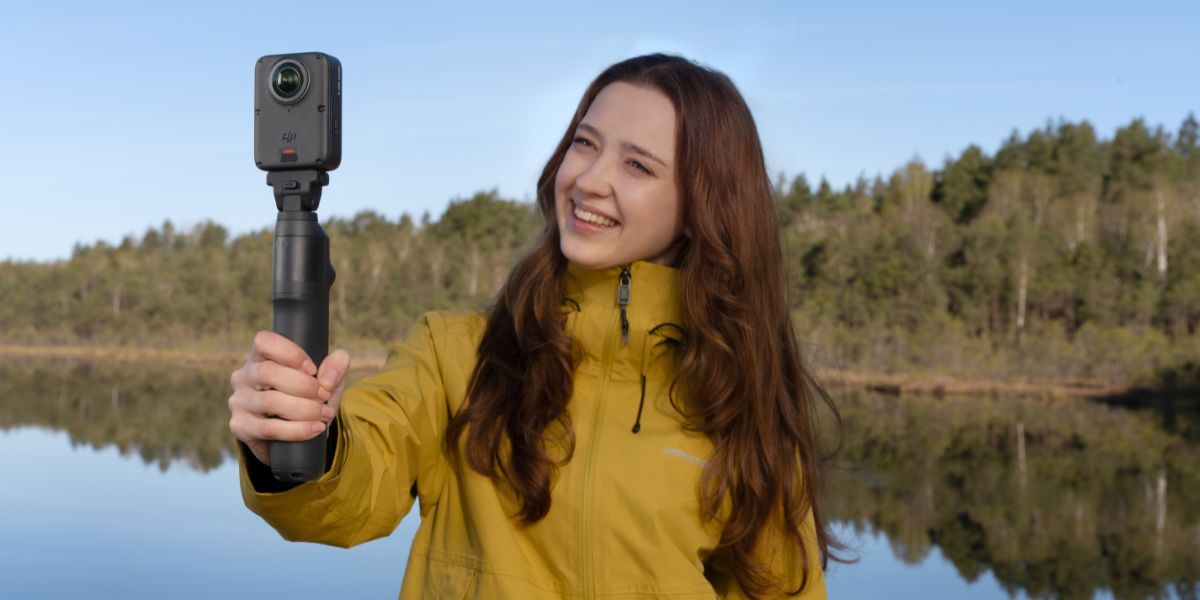
At a svelte 183 grams, the Osmo 360 II feels reassuringly dense and solid in the hand without pulling down on your wrist during extended handheld walking clips. Inside DJI has introduced an industry-first square high dynamic range (HDR) sensor configuration. Each of the two lenses covers an imaging area equivalent to a traditional one-inch sensor, but the clever square geometry increases sensor utilisation by 25 per cent. Basically, it captures significantly more visual data across a broader 14.5 stops of dynamic range while sipping battery power far more conservatively.
Previous panoramic hardware often forced creators to choose between high resolution and high frame rates. The Osmo 360 II eliminates that frustrating compromise, upgrading full spherical capture to 8K resolution at a silky smooth 60 frames per second. When you are panning across a busy landscape or tracking a fast subject, the footage remains crisp and free from jarring motion blur.

To really test its capabilities, I threw the camera in the back of the Mitsubishi Triton dual-cab for a shoot. Historically, 360 cameras are strictly daylight animals; the moment twilight arrives, footage usually degrades into a messy soup of digital noise. The Osmo 360 II tackles this with an updated AI SuperNight 2.0 processing mode. Combined with large 2.4-micrometre pixel dimensions and dedicated noise reduction algorithms, shooting the local area even under the street lamps of night delivered bright, surprisingly detailed images with rich contrast.
One of my absolute favourite selling points is the storage and power setup. Anyone who has ever driven hours to a scenic lookout only to discover their high-speed microSD card is sitting on their desk at home will appreciate the 105 GB of internal storage. I’m not sure why I’m so surprised, most of DJI’s new range comes with inbuilt storage but it’s at the point now that I barely use cards anymore. It’s just so much easier to turn it on and shoot.
When it comes to power, the battery is rated to record continuously for 100 minutes at 8K/30fps, and if you are in a rush, it fast-charges to 80 per cent in just 22 minutes. It is also native waterproof down to 10 metres straight out of the box, meaning you don’t have to fiddle with dive cases unless you are going deep.

The biggest anxiety when using bulbous fisheye lenses is scratching the glass. Dropping an ordinary 360 camera onto gravel usually means sending the entire unit away for a costly repair. DJI answered this problem with ultra-hard, ion-sputtered optical coating and a replaceable lens assembly. If an unfortunate scrape happens on the trail, you can swap the lenses yourself with a really easy to use replacement kit (priced fairly reasonably at AU$49) without taking the camera out of commission.
As for how it changes my daily workflow? It speeds everything up. Instead of worrying about multiple camera angles, you just capture everything. The audio is handled beautifully by a built-in four-mic array, and dropping the 10-bit D-Log M footage directly into DaVinci Resolve 21 Studio using DJI’s dedicated plugin makes the editing process remarkably smooth.
The Comparison: Stacking Up Against the Market
The obvious comparison in this category is the Insta360 X series, which has long dominated consumer spherical video. Insta360 set the early benchmark for user-friendly mobile editing, creative software presets, and widespread social media popularity.
However, the DJI Osmo 360 II distinguishes itself through genuine hardware robustness and raw imaging fidelity. The one-inch square sensors gather significantly more light than standard sub-one-inch action sensors, making dynamic contrast in harsh sunlight and evening footage noticeably cleaner. The user-replaceable lens element also solves one of the biggest ownership fears of the Insta360 platform, offering peace of mind that a single drop will not ruin your expensive gear.

For those like me who like to tinker with colour grading, the addition of native 10-bit colour profiles with seamless DaVinci Resolve integration gives the Osmo 360 II a highly polished, professional edge that traditional action cameras simply struggle to match. At AU$899 for the Standard Combo it’s one of the more affordable options for 360.
The Final Verdict
Living with the DJI Osmo 360 II genuinely transforms how you document your life. You no longer need to spend your holidays looking through a small digital screen trying to frame a shot. You simply mount the camera, enjoy the actual moment happening in front of you, and reframe the perfect perspective later.
With its robust sensor architecture, highly reliable low-light performance, smart replaceable glass design, and generous internal memory, this camera sets a fantastic new standard for spherical video creation. If you are looking for an all-in-one visual diary that ensures you never miss a split-second angle again, the DJI Osmo 360 II is highly recommended.
Price and Availability
Availability in Australia will be announced later in September.
- Osmo 360 II Standard Combo retails for AU$899
- Osmo 360 II Adventure Combo retails for AU$1,079
Enhance the Osmo 360 II filming experience with a range of new accessories. Each sold separately.
- Osmo 360 II Replacement Lens Kit (Dual) retails for AU$49
- Osmo 360 II Battery Extension Rod retails for AU$149
- Osmo Heavy Duty Clamp Kit retails for AU$69